

Playing fast is fun, but to be able to do it well, you need to be able to play the drum parts slowly first, as this is how you make sure that you’re playing accurately.
It’s really tempting to try and run before you can walk, but you’ll save yourself more time in the long run if you focus on getting things right at slower speeds first.
Learning Accurately at a Slow Tempo
Start by playing the drum part at a very slow tempo that you are confident that you can play consistently without making a mistake first, and then when you are comfortable with this, gradually increase the tempo.
Make sure that you’re clear on what exactly it is that you’re learning and how the parts fit together, and play it repeatedly at a slow tempo until you feel pretty confident that you’ve got it and that you can keep playing it indefinitely.
When you’re able to play the drum part consistently and it’s feeling solid, increase the tempo a bit to challenge yourself, and then once you’re happy with this tempo, go a bit faster again. Keep going like this, and don’t get frustrated if you get stuck on one tempo for a while. The trick is to find the sweet spot where it is slow enough that you’re still able to play it accurately, but fast enough that you are challenging yourself and forcing yourself to focus and concentrate to get it right.
Use of Metronome
The metronome is a really important tool for learning a musical instrument.
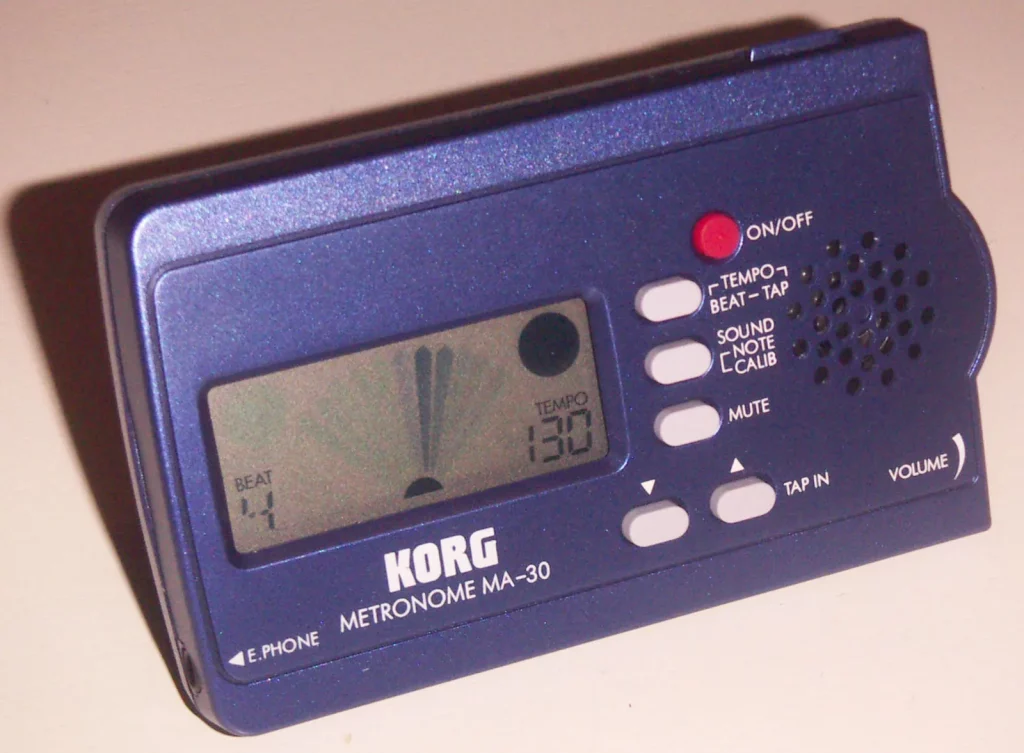
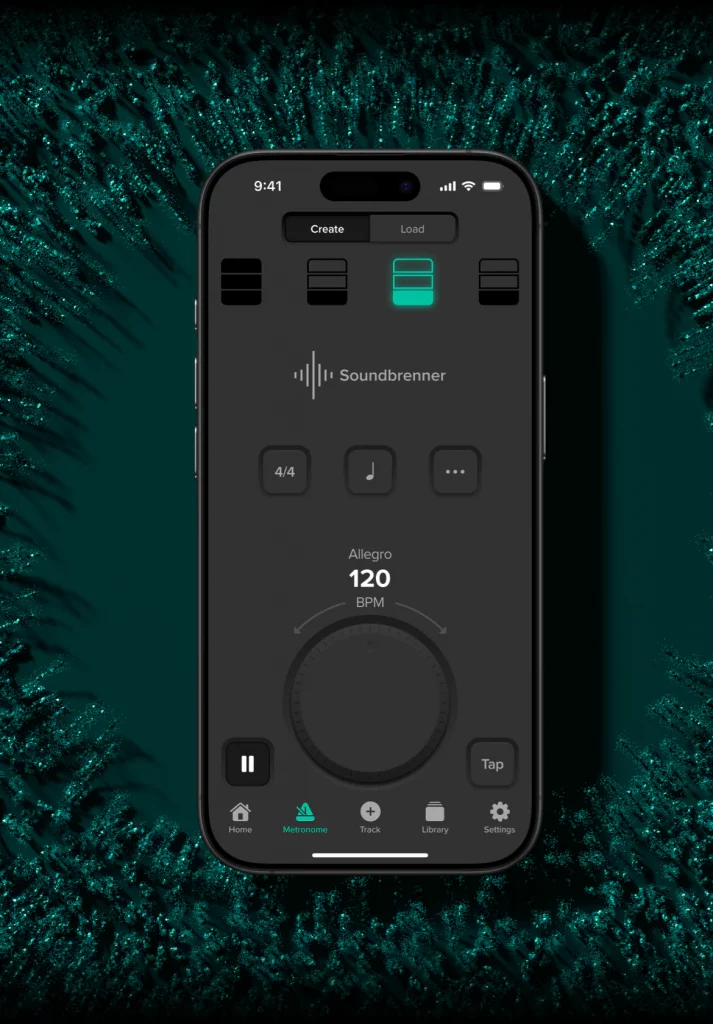
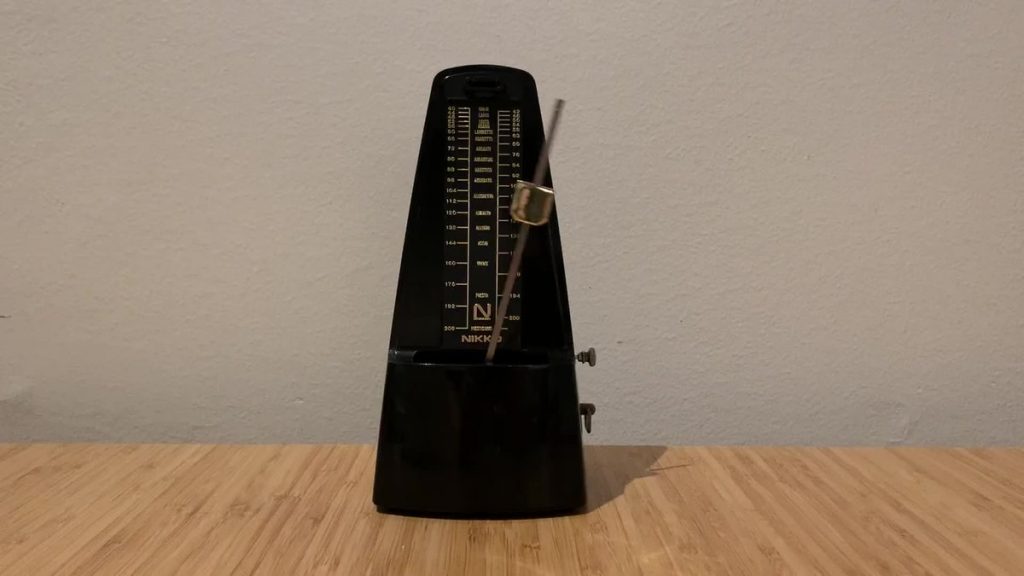
Using a metronome helps keep your playing consistent, helps you develop solid reliable timing, and it helps you measure your progress too.
For example, I might start learning a new drum part at around 90 bpm (beats per minute). I’ll play it at that tempo for a few minutes until I feel comfortable, and then increase it by 10 or 15 bpm, and then keep doing this until I hit my personal limit for the session. Usually, if you repeat this process across a few practice sessions, you’ll find that you’re able to get to the faster tempos after a while.
Don’t Get Frustrated
Don’t get frustrated if you feel stuck at a slower tempo. It’s good to focus on playing things accurately first, and you’ll eventually be able to speed up as you internalise the parts and develop muscle memory.
Sometimes it can even feel like you’re going backwards or getting worse, but this usually isn’t the case. There are a couple of reasons why it might feel that way:
- You are physically or mentally tired and having an off-day. Humans are not machines, and there are many variables that can affect how well you play on any given day e.g., sleep quality, mental focus, food intake, and many other things. If you monitor your progress with a metronome, you will see that your overall average speed is still increasing over time.
- The other reason is that your ear might be getting better. The more time you spend playing and listening to music, the greater your perception of detail becomes, and you start becoming aware of imperfections in your own playing that you were unaware of before. This can feel quite deflating when it happens, but it is a good thing, as your appreciation of subtlety and detail has improved, and your abilities will eventually catch up with what your ear wants to hear if you keep up the practice and strive for improvement.
Trust the Process
Trust in the process of learning and playing things slowly and accurately first, and you might surprise yourself with how quickly you can get to the faster tempos. But most importantly, have fun! It’s still fun to thrash around playing things fast even if they’re a little sloppy, and as long as this isn’t all you spend your practice time on, then you’ll get better eventually 👍
If you’re interested in having drum lessons in Brighton with me, you can find my prices here.